
.gif)

.jpg)

New hire orientation is the first formal step in helping employees understand the company, their role, and the basic processes they need to follow at work. It usually covers company policies, HR documents, payroll and benefits information, tools, workplace expectations, and introductions to managers or team members.
A strong orientation helps new employees start with clarity instead of confusion. It also gives HR teams a structured way to complete required steps, answer common questions, and connect the employee’s first day to the larger onboarding process.
This article explains what new hire orientation means, how it differs from onboarding, what to include in an orientation program, how long job orientation usually lasts, and the best practices HR teams can follow to make the process more useful for new employees.
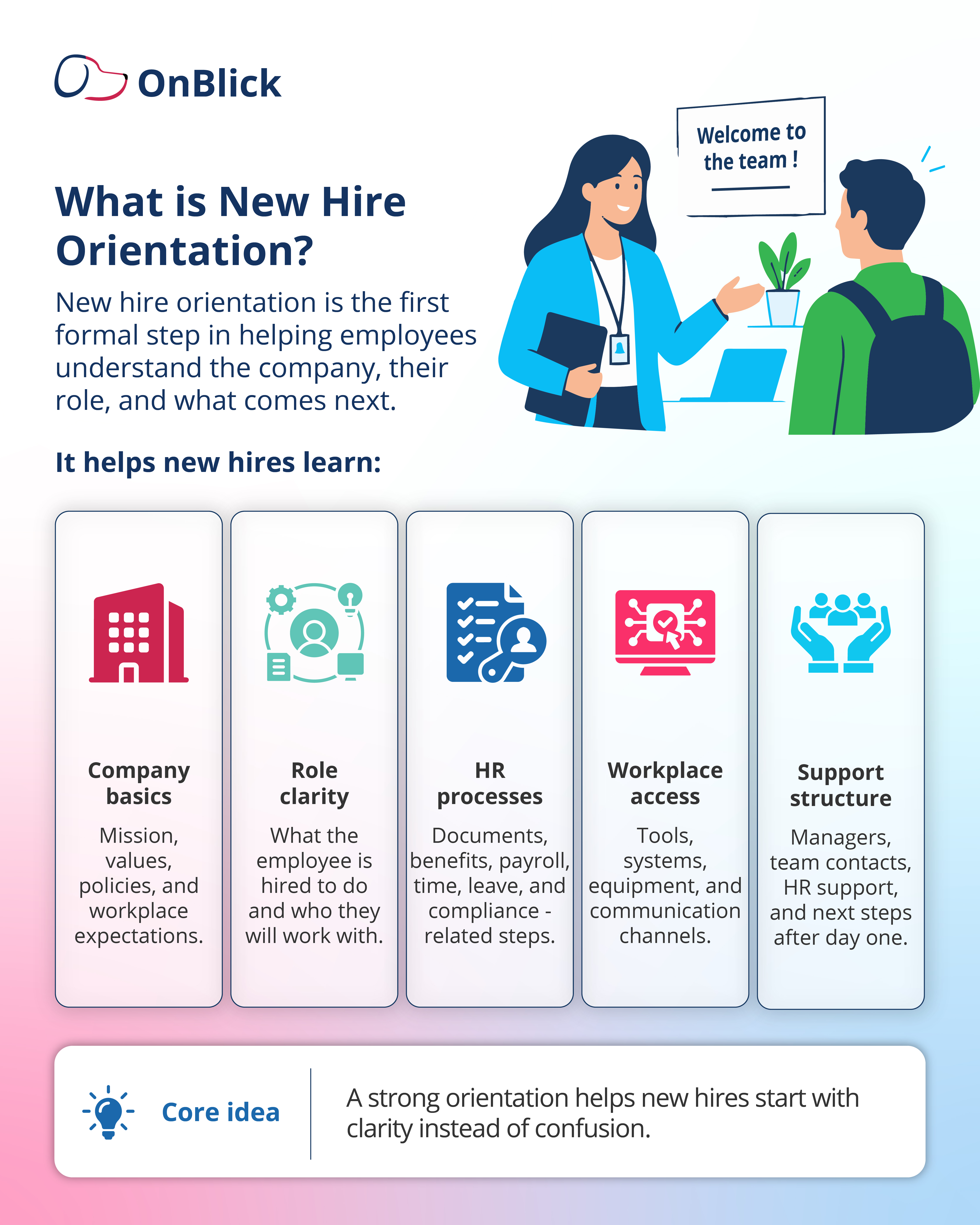
What is New Hire Orientation?
- New hire orientation is a structured introduction that helps new employees understand the company, workplace expectations, HR processes, and basic role information. It is usually held on the employee’s first day or during the first few days of employment.
- The purpose of new hire orientation is to give employees the information they need to begin work with clarity. This may include company policies, payroll and benefits details, required documents, system access, workplace rules, team introductions, and key contacts.
- For HR teams, orientation is also an important administrative step. It helps ensure that required paperwork, acknowledgments, employment-related processes, and employee setup tasks are completed consistently.
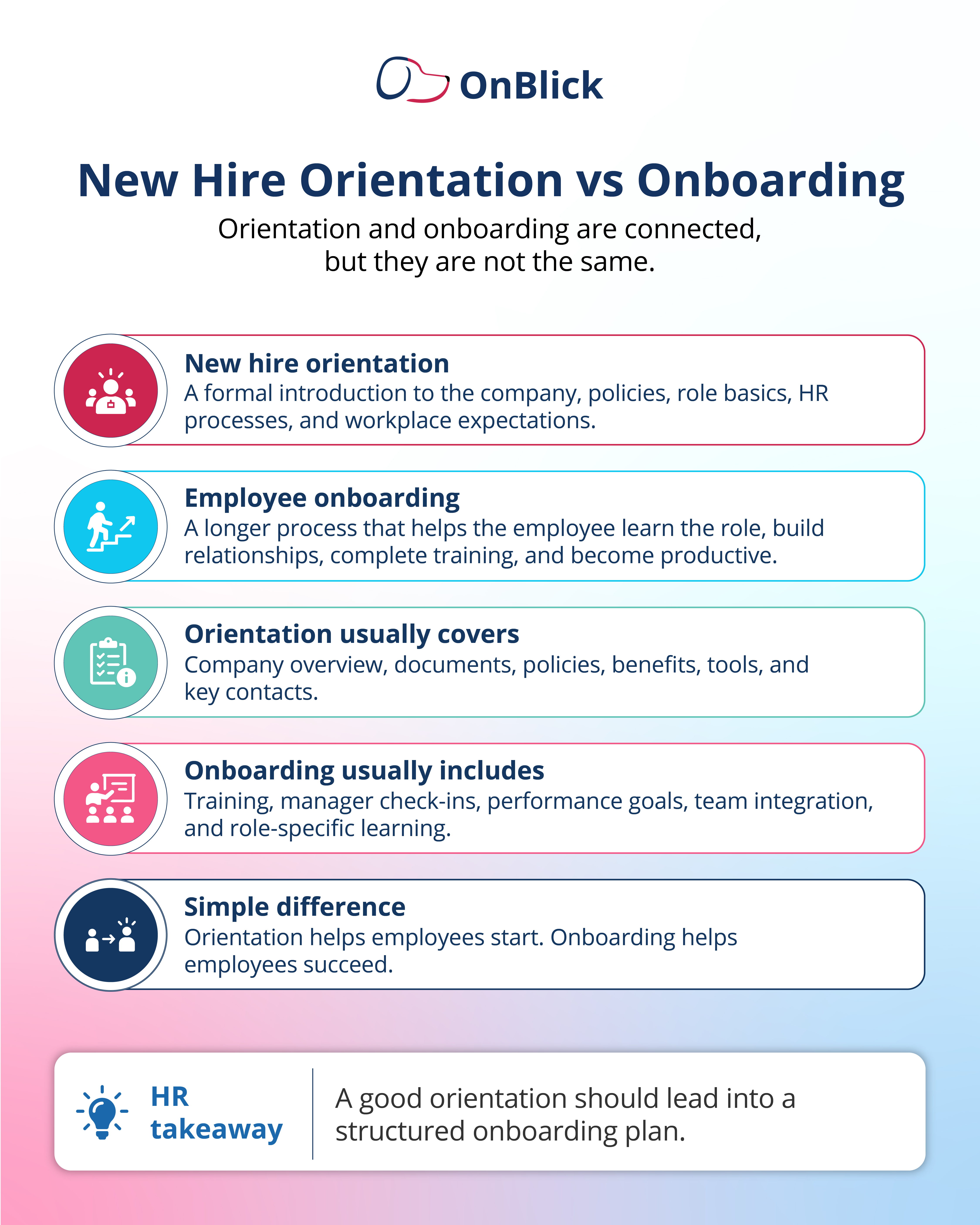
New Hire Orientation vs Onboarding
New hire orientation and onboarding are connected, but they are not the same.
- New hire orientation is usually a shorter introductory process. It focuses on welcoming the employee, explaining company basics, completing HR steps, and helping the employee understand what happens next.
- Employee onboarding is a longer process that may continue for weeks or months. It includes role-specific training, manager check-ins, performance expectations, team integration, and ongoing support.
In simple terms, orientation helps employees start. Onboarding helps them settle in, learn the role, and become productive. A strong HR process should connect orientation with the broader onboarding plan instead of treating it as a one-time event.
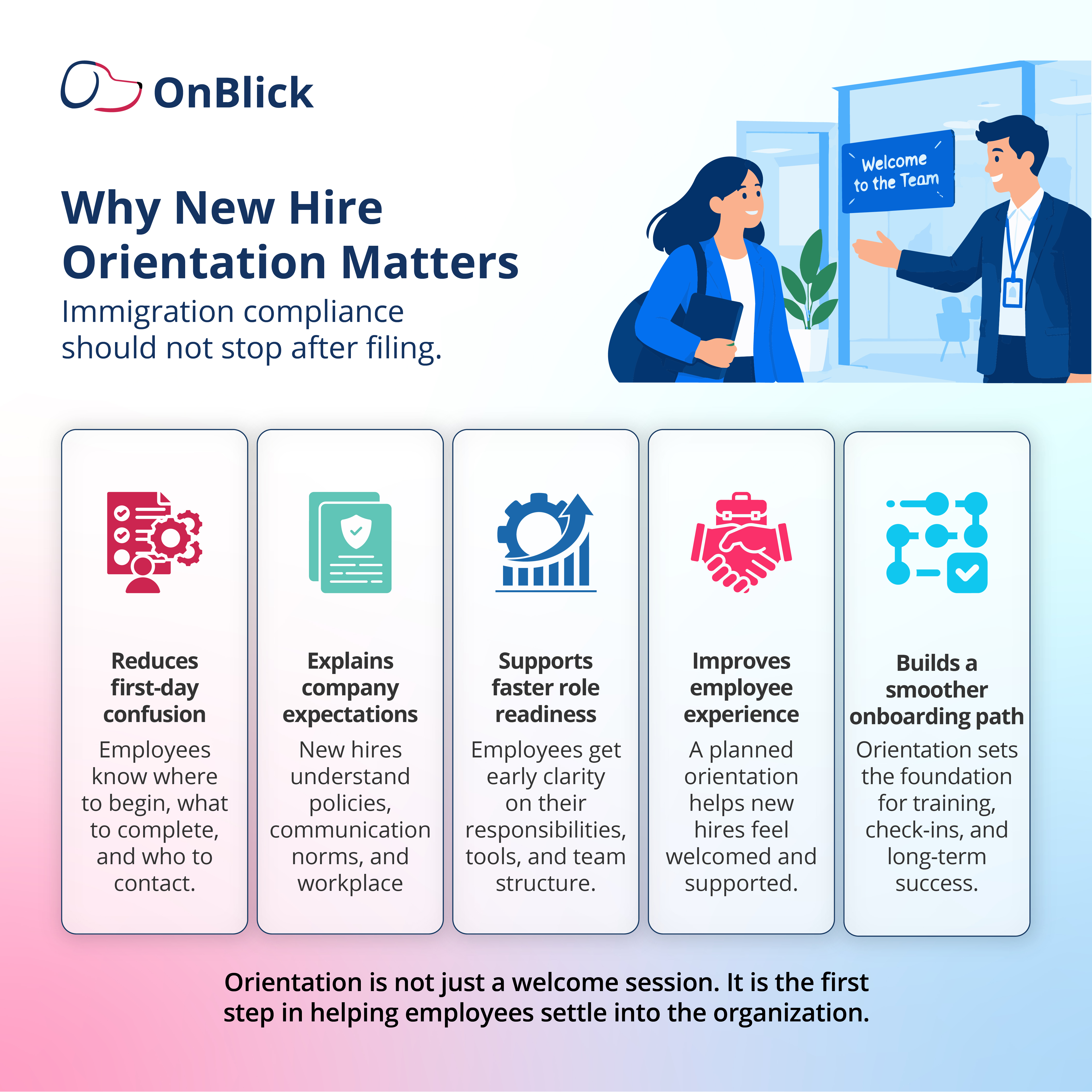
Why new hire orientation matters for HR teams
- A well-planned orientation helps reduce first-day confusion and gives new employees a more organized start. When employees know where to go, what to complete, who to meet, and how to access basic tools, they can begin with more confidence
- Orientation also helps HR teams create consistency. Without a structured process, important steps may be missed, documents may be delayed, and employees may receive different information depending on who handles the session.
- For employers, orientation can also influence the early employee experience. A rushed or unclear first day can make new hires feel disconnected. A thoughtful orientation shows that the company is prepared, organized, and ready to support them.
What happens during job orientation?
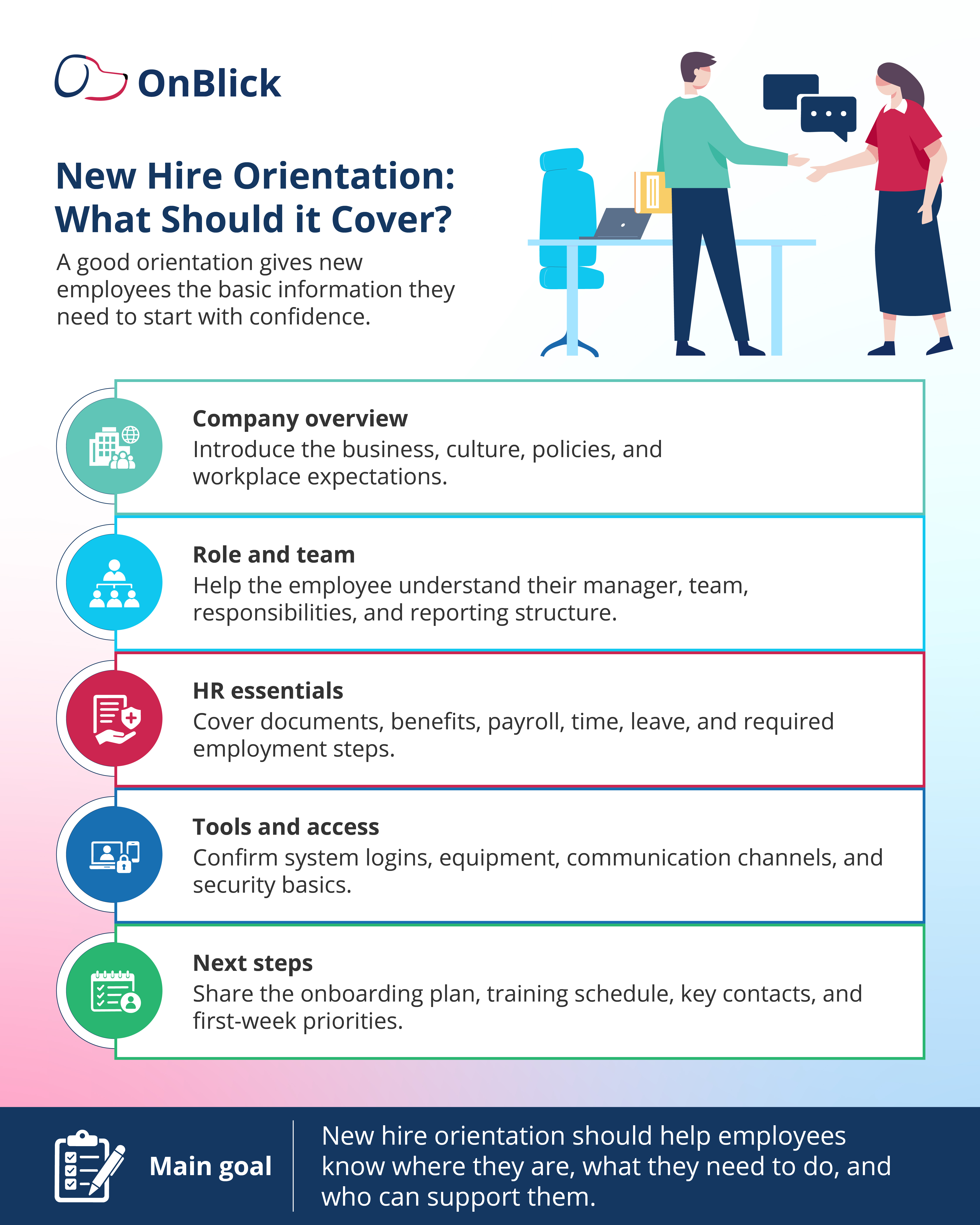
- Job orientation usually covers the basic information, and setup steps a new employee needs before starting regular work. The exact agenda may vary by company, role, and work arrangement, but most orientation programs include a few core areas.
- HR may begin with a welcome session and company overview. This can include the organization’s mission, values, workplace culture, communication norms, and basic policies.
- The employee may then complete documents, payroll forms, benefits information, policy acknowledgments, and employment verification steps. HR may also explain time tracking, leave requests, pay schedules, and attendance expectations.
- The orientation may also include system access, equipment setup, security instructions, team introductions, and a discussion of first-week priorities. By the end of orientation, the employee should know what they need to do next and who can help them.
Is orientation the first day of work?
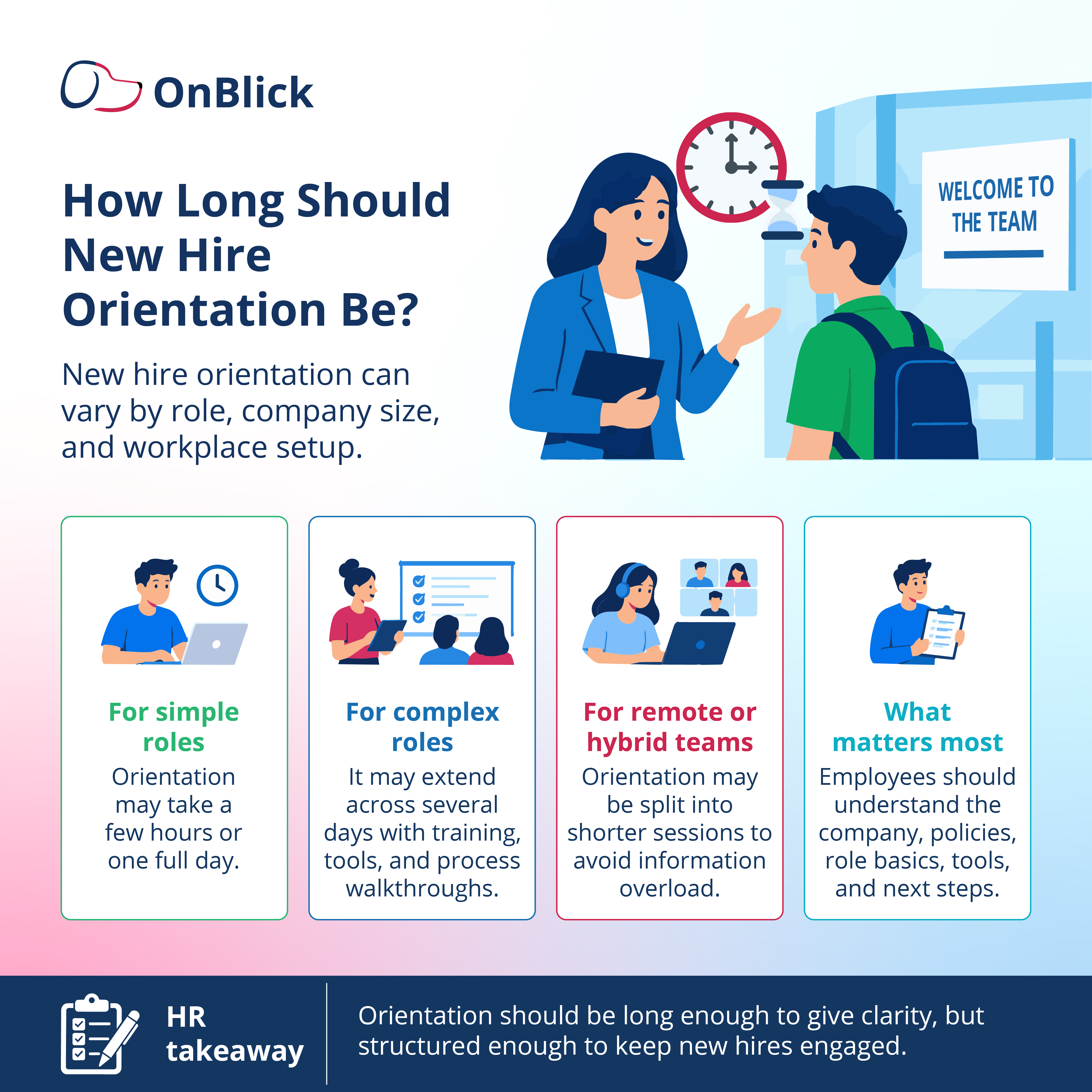
- Orientation often happens on the first day of work, but it does not always have to be limited to one day. Some companies complete orientation in a few hours, while others spread it across multiple days.
- For simple roles, a short first-day orientation may be enough to cover policies, paperwork, introductions, and work setup. For more complex roles, remote teams, compliance-heavy workplaces, or larger organizations, orientation may take longer.
- The key point is that orientation should not be rushed just to finish everything on day one. HR teams should plan the session based on what the employee needs to understand before beginning work.
How long is orientation for a job?
- Job orientation can last a few hours, one full day, or several days, depending on the company and role. There is no single duration that works for every employer.
- A short orientation may be suitable when the employee only needs basic company information, HR paperwork, and tool access. A longer orientation may be needed when the role requires detailed policy training, safety instructions, compliance steps, systems training, or several team introductions.
- HR teams should also consider how much information the employee can absorb at once. Covering too much in one session can make orientation feel overwhelming. In many cases, it is better to cover essentials first and move detailed role training into the onboarding plan.
Types of employee orientation
- Employee orientation can include different levels of introduction depending on the workplace.
- General orientation introduces the employee to the company. It may cover policies, culture, HR processes, benefits, payroll, communication channels, workplace expectations, and employee resources.
- Departmental orientation focuses on the employee’s team or department. It may include team structure, reporting lines, department goals, internal workflows, and key contacts.
- Job-specific orientation introduces the employee to their role. It may cover responsibilities, tools, performance expectations, training requirements, and first assignments.
- A complete orientation program may include all three. This helps new hires understand the organization, the team, and the role they are expected to perform.
New hire orientation agenda: what to include
A clear agenda helps employees know what to expect and helps HR manage the session more effectively.
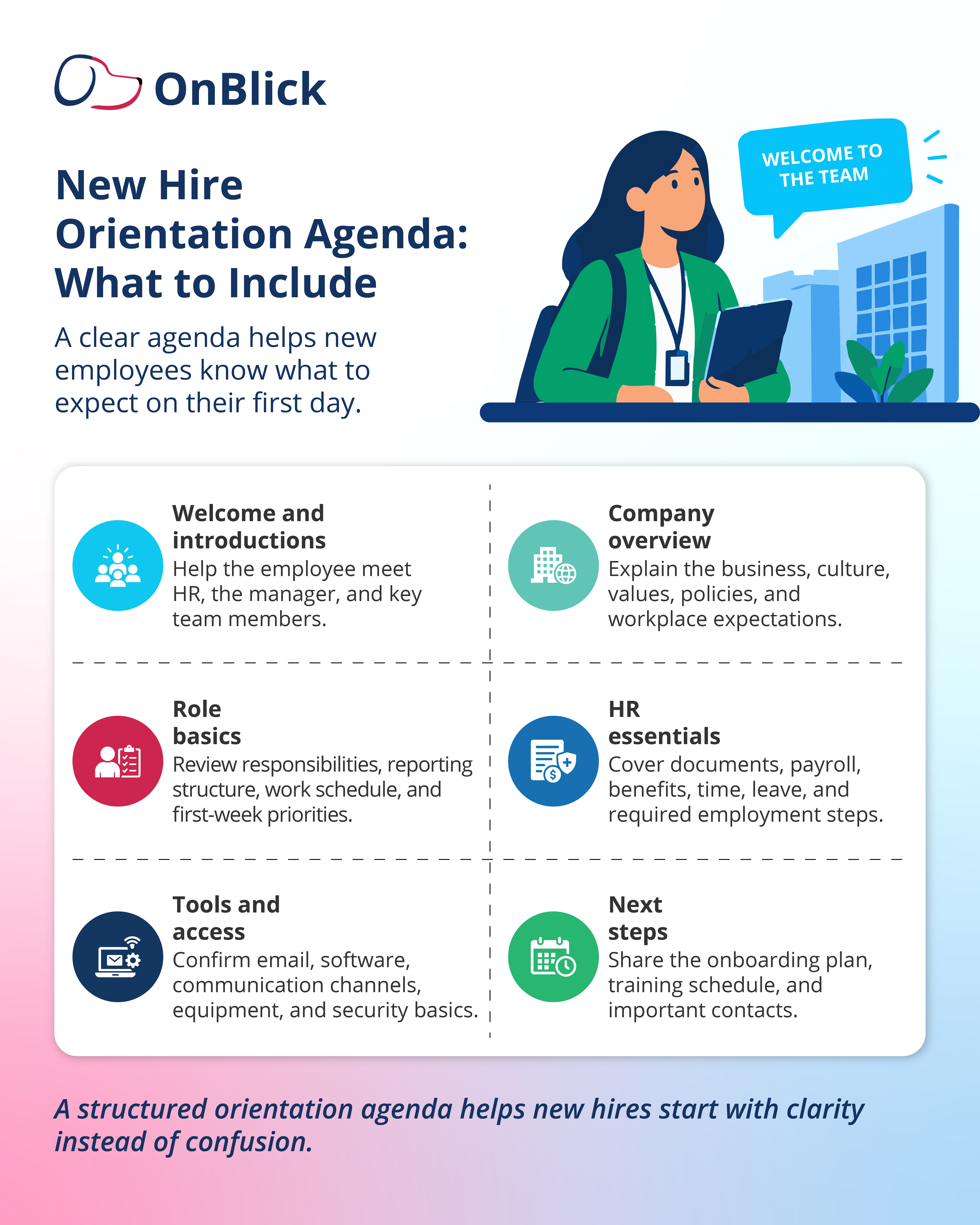
A simple new hire orientation agenda may include:
- Welcome and introductions: Meet HR, the manager, and key team members.
- Company overview: Explain the business, values, policies, and workplace expectations.
- HR essentials: Complete required documents, payroll details, benefits information, and employee acknowledgments.
- Role and team overview: Review the reporting structure, work schedule, responsibilities, and first-week priorities.
- Tools and access: Confirm email, HR portal access, software, equipment, and communication channels.
- Next steps: Share the onboarding plan, training schedule, important contacts, and follow-up checkpoints.
The agenda should be clear enough to guide the session, but flexible enough to answer employee questions.
New hire orientation checklist for HR teams
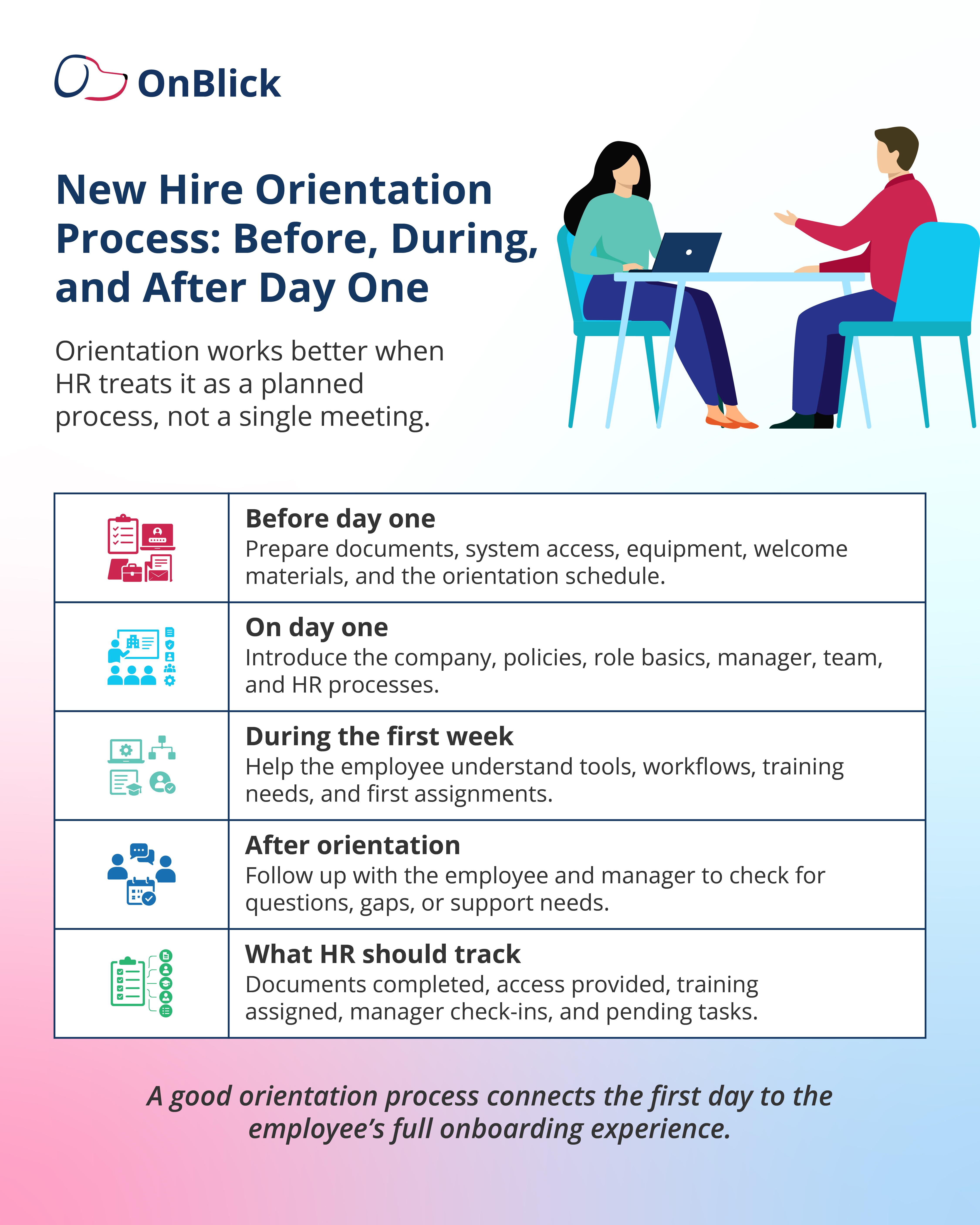
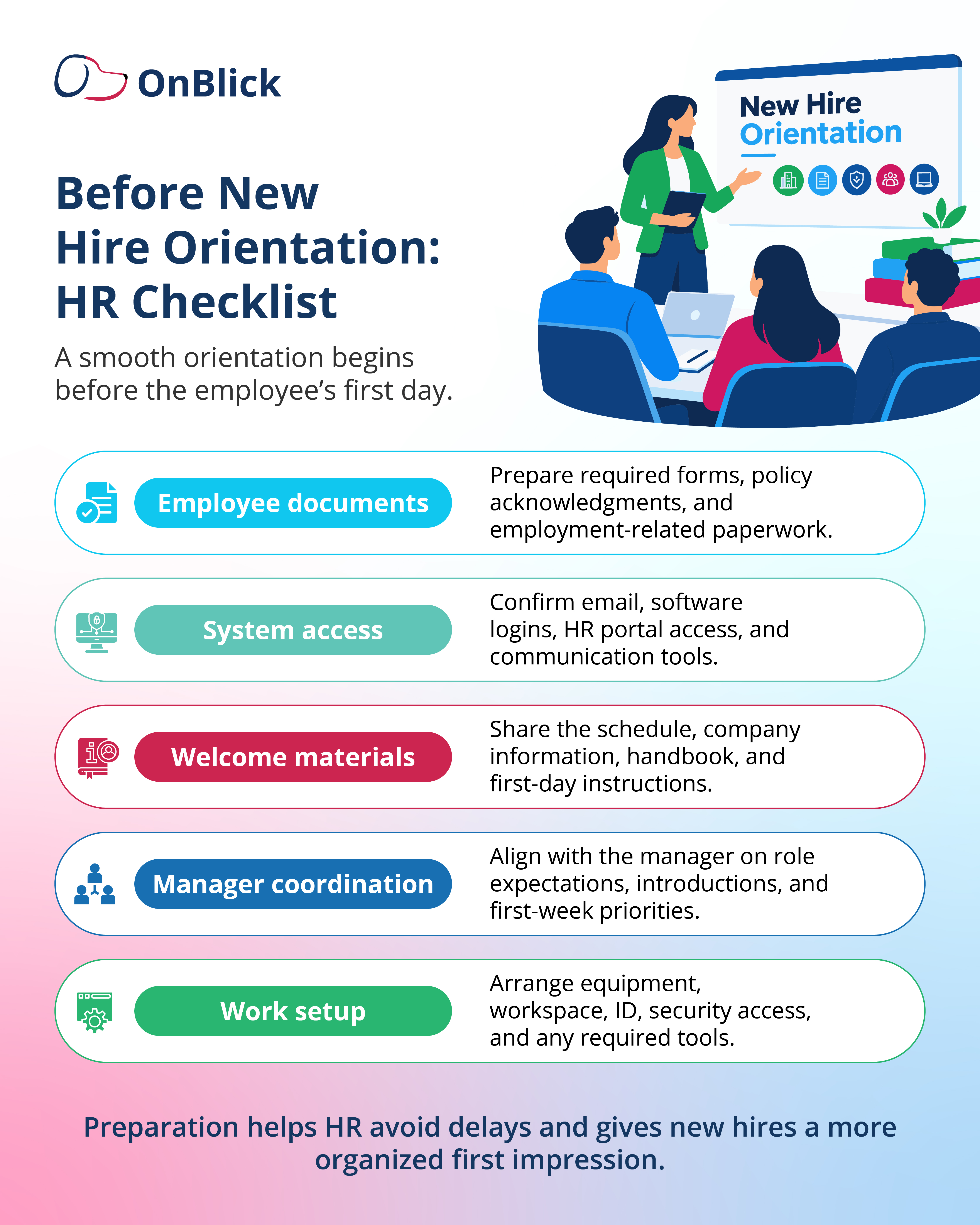
- A new hire orientation checklist helps HR teams make sure important steps are not missed. It also gives employees a more organized experience.
- Before orientation, HR should prepare the employee’s documents, schedule, system access, equipment, welcome materials, and manager coordination.
- During orientation, HR should cover company information, workplace policies, payroll and benefits, required forms, employee handbook details, time and leave processes, and key HR contacts.
- The employee should also receive information about tools, communication channels, security requirements, team introductions, and first-week priorities.
- After orientation, HR should confirm that required documents are complete, access has been provided, training has been assigned, and the manager has a clear follow-up plan.
New hire orientation: Best practices
HR teams can make orientation more useful by keeping the process structured, practical, and employee-friendly.
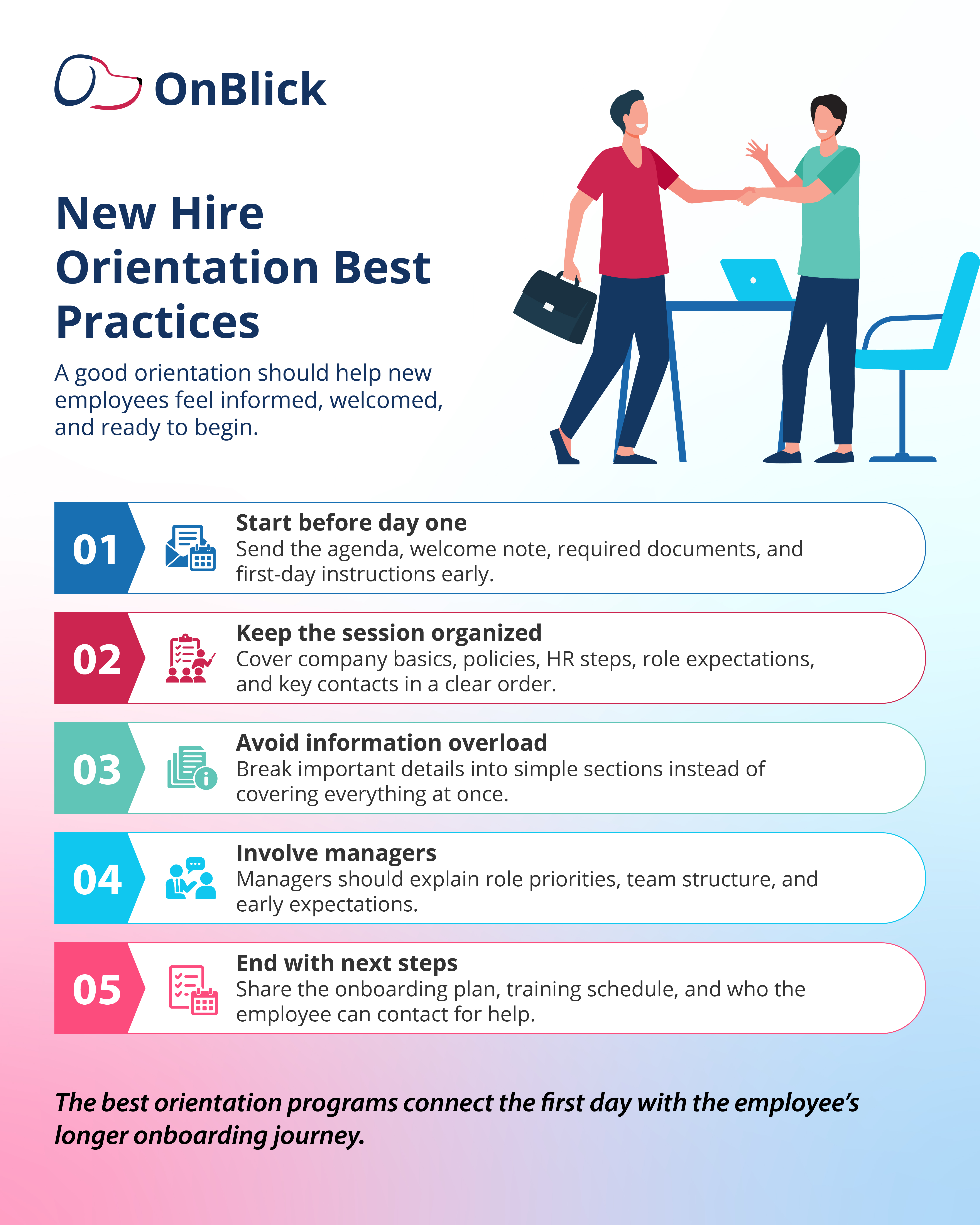
- Start before the first day. Sending a welcome note, schedule, reporting instructions, and required documents early can reduce confusion.
- Keep the session organized. Employees should understand the order of the day and why each step matters.
- Avoid information overload. HR does not need to explain everything in one sitting. Essential information should come first, while detailed role training can continue through onboarding.
- Involve managers. A manager’s presence helps the employee understand role expectations, team priorities, and early goals.
- Make time for questions. New hires may need clarity on policies, tools, schedules, benefits, payroll, or whom to contact for support.
- End with next steps. Orientation should close with a clear view of the onboarding plan, training schedule, and first-week priorities.
Common new hire orientation mistakes to avoid
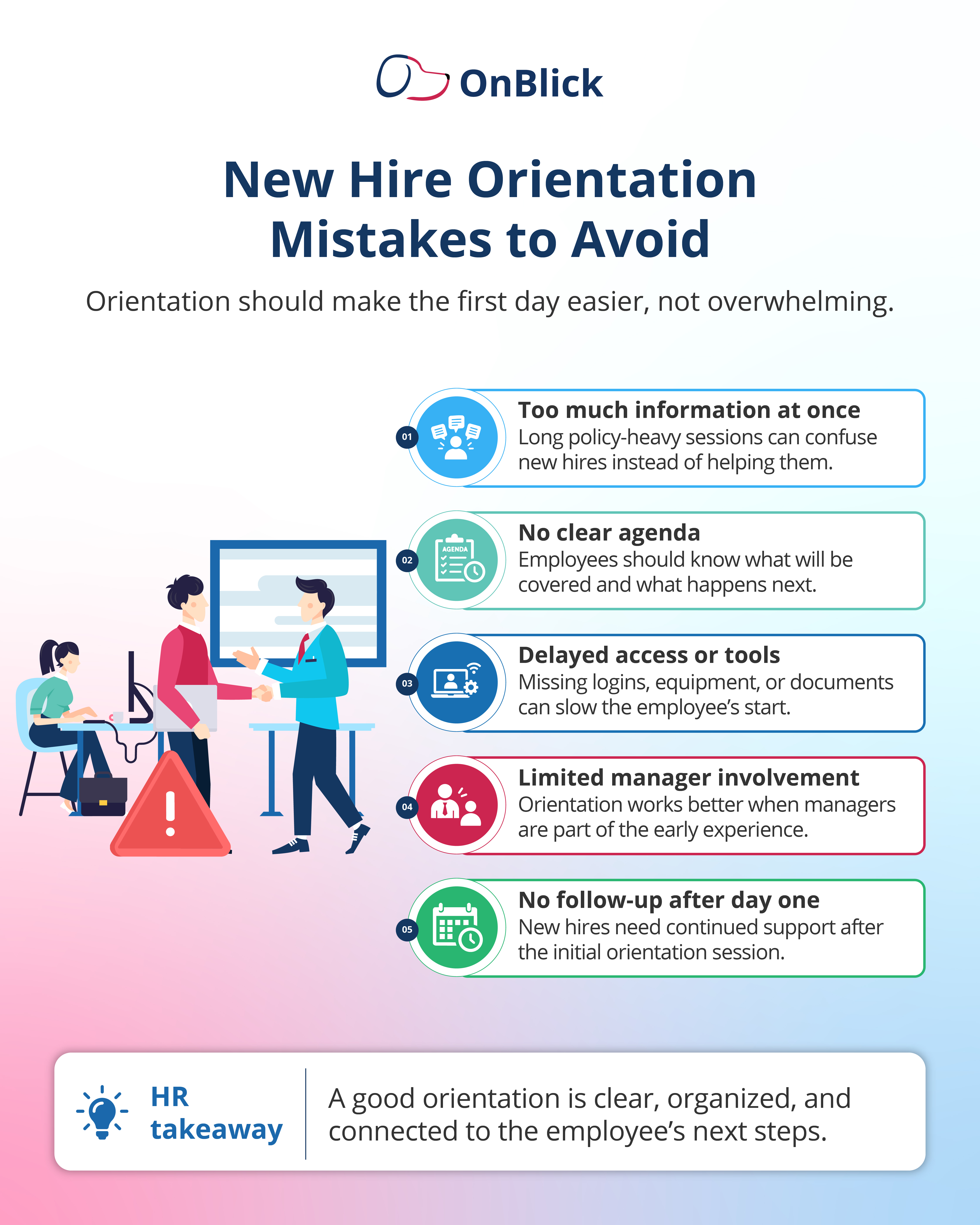
- One common mistake is treating orientation as only a paperwork session. Documents are important, but new hires also need context, support, and direction.
- Another mistake is giving too much information at once. When employees receive too many policies, tools, names, and instructions in one session, they may struggle to remember what matters most.
- HR teams should also avoid unclear ownership. If HR, IT, and managers are not aligned, employees may face delays with equipment, system access, documents, or role guidance.
- Limited manager involvement is another issue. Orientation works better when managers explain the role, team expectations, and early priorities.
- Finally, HR should avoid ending orientation without follow-up. New employees need continued support after day one, especially during the first week and first month.
How HR software can support new hire orientation
- HR software can help HR teams manage orientation more consistently and reduce manual follow-up.
- A structured HR system can help organize employee records, required documents, policy acknowledgments, onboarding tasks, reminders, approvals, and employee information in one place.
- It can also help HR track whether important steps have been completed, such as document submission, system access, employee handbook acknowledgment, payroll setup, benefits information, and manager check-ins.
- For growing teams, this visibility is important. It helps HR deliver a consistent orientation experience even when multiple employees, locations, departments, or managers are involved.
How OnBlick helps HR teams manage new hire orientation
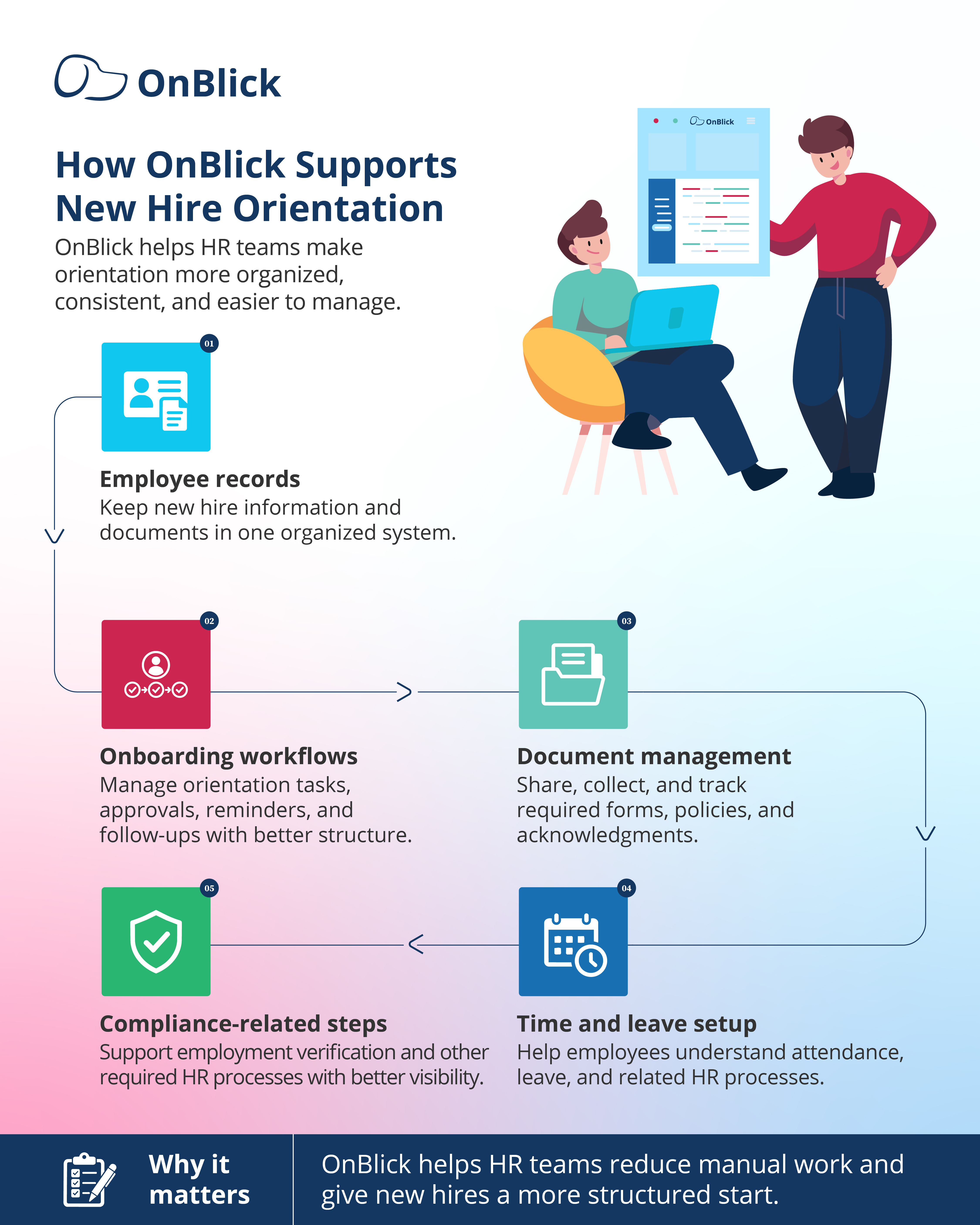
- OnBlick helps HR teams create a more organized and consistent new hire experience by supporting employee records, onboarding workflows, document management, time and leave processes, and compliance-related HR steps.
- HR teams can use OnBlick to manage employee information, track required documents, support onboarding tasks, organize policy acknowledgments, and maintain better visibility into employee lifecycle processes.
- For new hire orientation, this can help reduce manual work, avoid missed steps, and give employees a clearer start. It also helps HR teams connect orientation with the larger onboarding journey.
Schedule a free OnBlick demo to see how your HR team can manage new hire orientation, onboarding, employee records, documents, time and leave, and HR workflows with better visibility.
Conclusion
New hire orientation is more than a first-day formality. It is the starting point for helping employees understand the company, complete required steps, meet the right people, and begin their role with clarity.
For HR teams, the goal is to make orientation structured, useful, and connected to the broader onboarding process. A strong orientation should cover company basics, HR essentials, role information, tools, access, and next steps without overwhelming the employee.
When orientation is planned well, new hires are more likely to feel prepared, supported, and confident as they begin their journey with the organization.
FAQs about New Hire Orientation
1. What is new hire orientation?
New hire orientation is the process of introducing new employees to the company, workplace policies, HR processes, role basics, tools, and key contacts. It usually happens on the first day or during the first few days of employment.
2. What is the purpose of new hire orientation?
The purpose of new hire orientation is to help employees start with clarity. It gives them important information about the company, required documents, workplace expectations, payroll, benefits, tools, and next steps.
3. How long does job orientation last?
Job orientation may last a few hours, one full day, or several days depending on the company, role, industry, and amount of training required. HR teams should make it long enough to cover essentials without overwhelming the employee.
4. Is orientation the same as onboarding?
No. Orientation is usually a shorter introductory process, while onboarding is a longer journey that includes training, manager check-ins, role development, and ongoing employee support.
5. What should be included in a new hire orientation checklist?
A new hire orientation checklist should include documents, payroll and benefits information, policy acknowledgments, system access, equipment setup, company overview, role introductions, manager check-ins, and onboarding next steps.
6. What happens at a job orientation?
At job orientation, employees usually learn about the company, complete HR paperwork, review policies, understand payroll and benefits, receive system access, meet key people, and learn what to do during the first few days.
7. Should managers be involved in new hire orientation?
Yes. Managers should be involved because they help explain role expectations, team structure, early priorities, and performance goals. Their involvement can make the employee’s first-day experience more useful and role-specific.
8. How can HR make orientation more engaging?
HR can make orientation more engaging by keeping the session organized, avoiding too much information at once, using real examples, involving managers, encouraging questions, and giving employees a clear plan for what happens next.
9. What is the difference between employee orientation and training?
Employee orientation introduces the employee to the company, policies, HR processes, and role basics. Training focuses on building the specific knowledge or skills the employee needs to perform the job.
10. How can HR software help with new hire orientation?
HR software can help HR teams manage orientation tasks, employee documents, policy acknowledgments, reminders, onboarding workflows, employee records, and follow-ups in a more organized and consistent way.


.jpg)


